
Neurological Conditions We Support
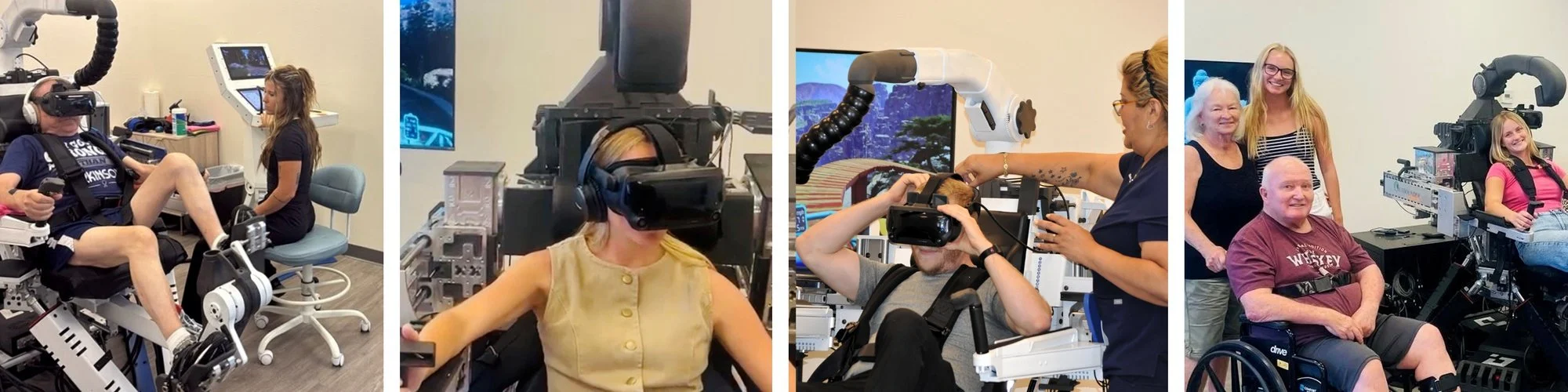
Individualized neurological rehabilitation
Neurological conditions and injuries can affect people in very different ways. Changes may involve movement, balance, coordination, endurance, confidence and the ability to manage everyday activities. Recovery and support needs also vary greatly from one person to another.
At Neuro Recovery Institute, our approach begins with the individual rather than the diagnosis. We look at current abilities, previous rehabilitation, ongoing challenges and the goals that still matter to each person, then develop an individualized program designed to provide appropriate levels of movement, repetition and challenge.
Our programs combine clinical oversight, one-to-one support and the Outbounder Advanced Rehabilitation System as part of a broader individualized approach.
Stroke - Continuing recovery beyond the plateau
Recovery after a stroke is different for every person. For some, progress happens quickly. For others, recovery continues over months or years, and some people come to NRI after being told that they may have reached a plateau.
Our individualized stroke rehabilitation programs use purposeful movement, repetition, active participation and clinically guided exercise to help stroke survivors continue working towards improvements in mobility, balance, function and independence.
Being told that progress has slowed does not necessarily mean there is nothing more to explore.
Parkinson’s Disease - Supporting movement, mobility and confidence
Parkinson’s can gradually make everyday movement more difficult, affecting balance, mobility, coordination, posture and confidence.
At NRI, we support people living with Parkinson’s through individualized, technology-assisted programs designed to help them remain active, engaged and working towards the things that matter to them.
Our focus is on supporting movement, mobility and function, while recognizing that every person living with Parkinson’s is different and outcomes will vary.
Traumatic Brain Injury - Supporting movement, function and independence
A traumatic brain injury (TBI) can affect people in very different ways. Changes may involve movement, balance, coordination, endurance and confidence, as well as the ability to manage everyday activities.
At NRI, we provide individualized rehabilitation designed to help people living with the effects of traumatic brain injury remain active, engaged and working towards meaningful goals.
Recovery after traumatic brain injury does not follow a single timetable.
Other conditions we are evaluating
As NRI develops, we are continuing to evaluate how our individualized, technology-assisted approach may support people living with a wider range of neurological and physical rehabilitation needs.
Areas currently being explored include:
Spinal Cord Injury
Multiple Sclerosis
Cerebral Palsy
Oncologic Physical Therapy
These areas are still being evaluated and are not yet established NRI programs. If you are living with one of these conditions, or supporting someone who is, we would be happy to discuss your circumstances and whether an assessment may be appropriate.
An approach built around the individual
Whatever the diagnosis, our starting point is the same.
We aim to understand:
Where you are now
What challenges you are experiencing
What rehabilitation or support you have already received
What goals still matter to you
Whether the NRI approach is appropriate for your needs
We believe progress should be assessed rather than assumed, and that meaningful change is not always captured by a single clinical score.
For some people, progress may mean improved balance or mobility. For others, it may mean greater confidence, increased participation, improved function or being able to do something more independently.
Talk to us
If you are living with a neurological condition or injury, or supporting a family member who is, we would be very happy to talk with you.
A complimentary consultation gives you the opportunity to tell us about your circumstances and goals, learn more about the NRI approach and discuss whether it may be appropriate for you.